
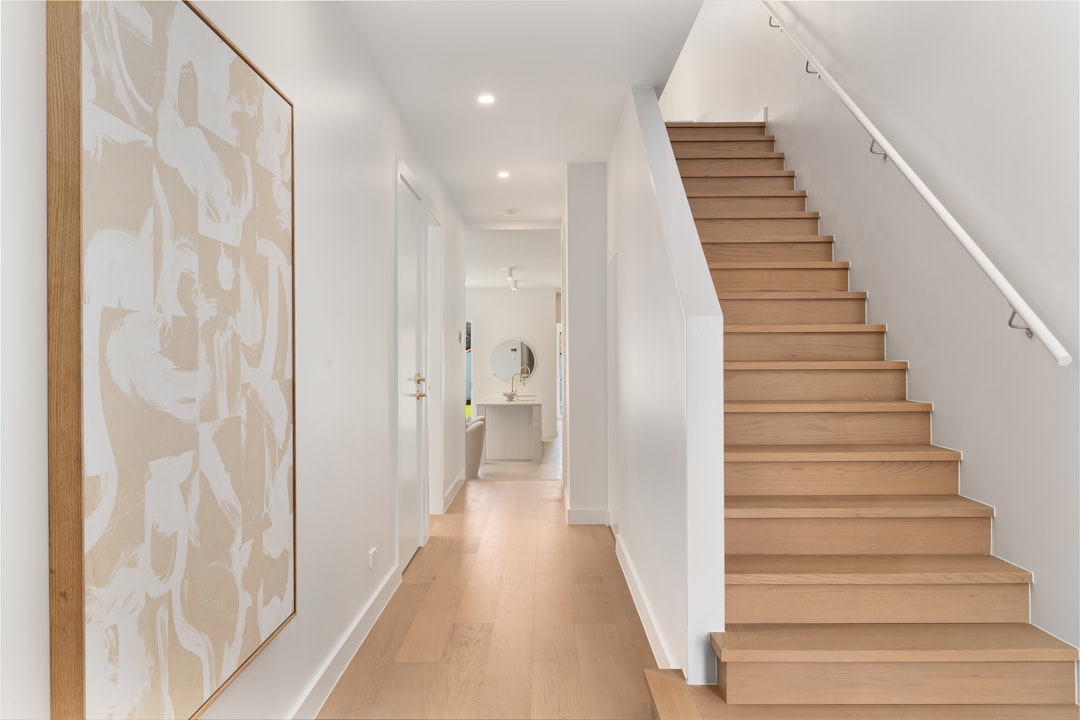
Choosing hardwood flooring is one of the most visible decisions you will make in a home, because it affects how every room feels the moment you walk in. In New Jersey, where homes range from classic colonials to coastal retreats and newer open-plan builds, the right floor has to do more than look good under showroom lighting. It has to suit the architecture, handle everyday traffic, and work with the transitions between rooms, hallways, and staircases. When flooring is selected thoughtfully, even major stair upgrades feel integrated rather than added on later, and the entire home reads as more polished, balanced, and livable.
Start With the Way Your Home Is Actually Used
Before comparing wood species or stain colors, take a realistic look at how the space functions day to day. A busy family entry, a kitchen that opens into the living room, or a second floor with constant foot traffic will place different demands on flooring than a quiet guest room or formal dining area. Hardwood is durable, but the best choice depends on whether you need stronger resistance to wear, easier maintenance, or a more refined appearance.
Households with children, pets, or frequent entertaining often do better with wood species and finishes that are more forgiving. A floor with visible natural grain and a matte or satin finish tends to disguise minor dust and surface marks better than a very dark, glossy floor. By contrast, if your priority is a tailored, elegant look in a lower-traffic part of the house, you may prefer a smoother grain and deeper tone.
It is also worth thinking about continuity. In many New Jersey homes, the first floor is visually connected from the entry through the main living spaces. Flooring that feels harmonious across those areas will usually serve the home better than treating each room as a separate design decision.
Understand Wood Species, Grain, and Color
Hardwood flooring often looks deceptively simple, but the species you choose changes the feel of the room in important ways. Oak remains a favorite for good reason: it is versatile, attractive, and available in a wide range of finishes. White oak in particular suits both traditional and modern interiors, offering a clean grain that works well with natural tones, medium browns, and contemporary muted stains.
Maple has a smoother, more understated grain and can create a quieter visual field, which some homeowners prefer in minimalist or transitional spaces. Hickory is bolder and more character-rich, making it a strong option when you want variation, movement, and a more rustic or high-energy look. Walnut is prized for its rich color and sophistication, though it is often selected more for aesthetics than for heavily used areas where maximum hardness is the priority.
Color matters just as much as species. Lighter and mid-tone floors can make rooms feel more open and tend to adapt well over time as furnishings change. Dark floors can look dramatic and elegant, but they often require more attentive upkeep to keep dust and small surface marks from standing out. In homes with mixed natural light, a balanced mid-tone is frequently the safest long-term choice.
| Wood Type | Look | Best For | Style Notes |
|---|---|---|---|
| White Oak | Balanced grain, versatile tone range | Most living areas and whole-home continuity | Works with traditional, transitional, and modern interiors |
| Maple | Smoother, cleaner grain | Refined rooms and lighter visual schemes | Feels understated and contemporary |
| Hickory | Bold variation and strong character | Busy households and rustic-leaning spaces | Adds movement and visual texture |
| Walnut | Deep, rich appearance | Lower-traffic areas where warmth is the priority | Elegant and distinctive |
Match Flooring to Stair Upgrades for a Cohesive Interior
Stairs are often treated as a separate project, but visually they are part of the same story as the floor. If you replace or refinish hardwood flooring without considering the staircase, the transition can feel abrupt. Treads, risers, nosings, railings, and stain color should all be considered together, especially in open foyers or central stair halls where the staircase acts as a focal point.
For homeowners planning a full refresh, coordinating flooring selection with stair upgrades often produces a more balanced and intentional result than treating each surface separately. The goal is not always to make everything identical. In some homes, contrasting painted risers with stained treads can look sharper than a fully matched stair. In others, using the same wood tone across floors and stairs creates the calmest, most seamless effect.
Safety and maintenance also deserve attention. Stair surfaces should offer a finish that looks refined without becoming slick, and the construction details need to be clean and precise. Poor transitions or mismatched profiles are noticeable immediately. Done well, stair upgrades elevate the quality of the entire home because they connect levels and sightlines in a way flat flooring alone cannot.
Choose Between Solid and Engineered Hardwood Carefully
In New Jersey, climate and installation conditions matter. Seasonal humidity, indoor heating, and the specific structure of the home can all influence whether solid hardwood or engineered hardwood is the better fit. Solid hardwood offers authenticity, longevity, and the possibility of future refinishing over many years, which makes it appealing for main living spaces and long-term homeowners.
Engineered hardwood, however, can be an excellent solution when stability is a priority. Its layered construction helps it perform well in areas where environmental fluctuations are more of a concern, and it can be especially useful over concrete subfloors or in spaces where solid wood may be less practical. This does not make it a lesser option; it simply makes it a more strategic one in the right setting.
When comparing the two, ask practical questions:
- What type of subfloor is already in place?
- Will the flooring run through multiple levels of the home?
- Is the area above a basement, slab, or radiant heat system?
- Do you want the option of multiple future refinishings?
- How important is dimensional stability in this space?
The right answer is usually the one that balances appearance, performance, and the conditions of the house rather than following a blanket rule.
Focus on Installation Quality, Finish, and Long-Term Value
Even beautiful hardwood can disappoint if the installation is rushed or the finishing choices are wrong for the home. Subfloor preparation, moisture assessment, board layout, transition details, and finish selection all affect the final result. A floor should not only look attractive on installation day; it should continue to feel right after months and years of normal living.
Finish sheen is a good example. High gloss can make a room look formal, but satin and matte finishes are often more practical and current, especially in family homes. Plank width also changes the impression of the room. Wider planks can feel expansive and updated, while narrower boards may suit older homes where a more classic proportion feels appropriate.
Before making a final choice, use this checklist:
- Bring samples home. View them in morning light, afternoon light, and evening lamplight.
- Test them against trim and cabinetry. Flooring should complement fixed features, not compete with them.
- Think about adjacent stairs and landings. Continuity matters more than many homeowners expect.
- Choose a finish for real life. Beauty should not come at the cost of constant upkeep.
- Work with an experienced local installer. Regional conditions and older home layouts require judgment, not just product knowledge.
That last point is where professional guidance becomes especially valuable. A seasoned local company such as Gio Wood Floors can help homeowners in New Jersey weigh species, plank size, finish, and stair upgrades in a way that respects both the house and the people living in it. Good advice at the planning stage often prevents expensive revisions later.
Ultimately, the best hardwood flooring is not the trendiest choice or the darkest stain or the widest plank. It is the floor that fits your architecture, your habits, your maintenance tolerance, and the visual flow of the home from one room to the next. When those decisions are made with care, hardwood flooring and stair upgrades add more than surface beauty; they create a home that feels finished, grounded, and enduring from the first step inside.
For more information visit:
giofloors.com
https://www.giofloors.com/
Kenilworth – New Jersey, United States
New Jersey flooring contractor specializing in hardwood, LVP, laminate & engineered flooring. Expert installation, refinishing, repairs & stair upgrades.
